What to do if your snail lays eggs
Freshwater snails are some of the most prolific aquatic animals you can keep. While some species lay only 1-4 eggs at a time, many snails lay tens or hundreds in a single round!
These eggs can be a complete surprise for beginners and advanced enthusiasts alike! Fortunately, caring for freshwater snail eggs is a simple task, and we will discuss how to care for some of the more common species below.
Where can I find freshwater snail eggs?
This is the most likely place for freshwater snail eggs in your aquarium.
Also apply Mysterious Snails
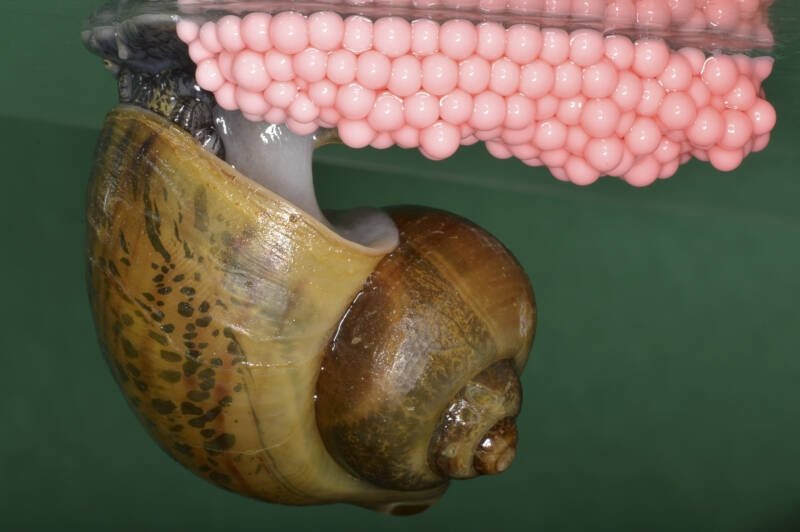
Mystery snails are a species of apple snail, and all apple snails lay large numbers of dozens of eggs at a time. These packages are placed above the water in a moist place; usually along exposed glass, tank rim, or hood, where humidity remains high.
Apple snail eggs develop for 3 to 4 weeks, with small dark spots that are a sign of developing fertile embryos. Eventually, the young freshwater snails are released and fall into the aquarium.
Ram's horn snails
Rams horn snails are the species most people think of when they imagine a reservoir invaded by freshwater snails. They lay eggs in gelatinous masses that contain 1 to 2 dozen embryos at a time.
The development time depends on the temperature and can last between 1 and 4 weeks, the heat accelerating the process.
The Ramshorn snail's trick is that they reproduce both sexually and asexually. If there is only one snail, they can create clones of themselves that will eventually overwhelm your aquarium! This is why Ramshorn snails are often seen as angry hobby pests.
If ramshorn snails are your favorite freshwater snail or you're looking for ways to control their numbers, check out my Guide to the Ramshorn Snail !
Malaysian Trumpet Snail
These freshwater snails are unusual in that they are live snails! Instead of laying eggs, they only have a child once a month and can reproduce both asexually and sexually.
Melci Asasin
Assassin snails are carnivorous freshwater snails that are not as prolific as some of their cousins. They typically lay only one egg per pair (but do mate frequently). Each egg needs 1 to 2 months to develop, depending on the temperature. These eggs are scattered throughout the aquarium in sheltered places, such as plant debris and floating corners.
melci nerite
If you find Nerite snail eggs, you have nothing to fear if you are worried about overcrowding. They will prolifically scatter small white eggs on any hard surface they can find.
However, Nerite snail eggs and chicks need salt or water to thrive. You won't be seeing the Nerite snail pup in your aquarium anytime soon.
What should I do when I find eggs?

Freshwater snail eggs are generally self-sufficient. They are usually encased in a gelatinous mass that is bitter and unappealing, or in a hard material that is difficult to break.
Although freshwater snails are not devoted parents, they do have good instincts and many species lay their eggs above the waterline or hide them among decorations. You have nothing to do unless you are worried that fish or other inhabitants may eat the young snails.
How long does it take for the eggs to hatch?
The period of time during which snail eggs hatch depends on both the species in question and factors such as pH and temperature.
Ramshorn snail eggs have one of the fastest growth times, with young snails hatching within a week of laying.
Assassin snails are some of the slowest, with 1 to 2 months being typical gestation periods.
Caring for young freshwater snails
If you have left your young snails with their parents, they can be treated like miniature adults in terms of care and feeding. Vegetarian and detritivorous snacks can be offered with blanched vegetables such as spinach and cauliflower.
Carnivores will eat meaty prey and both typically eat prepared foods. Night feeding is the best way to ensure that young freshwater snails have enough to eat and are not harassed by their tank mates.
What if I don't want any more snails?
Removing any eggs you find is the safest bet. Snails and mystery snails are the easiest to control because they lay their eggs above water.
Simply look for clusters of eggs once a day and scrape up any that you find.
Ramshorn snails are a bit more difficult to control; when they lay eggs on the glass, they can also be scratched. However, the egg masses are transparent when newly laid and are easy to miss elsewhere in the aquarium.
Asasin snails multiply slowly and the eggs take even longer to develop. Baby snails tend to burrow even deeper than adults and can be difficult to remove by hand.
Baiting assassin snails with fish or other meat will also attract young snails which can then be removed.
Because Malaysian trumpet snails are live carriers, they do not have eggs to remove or control; the best option is bait and manual removal of the young. And since they need brackish or salty water to hatch Nerite snail eggs, they control themselves!
If you have another species of snail that lays eggs, it will tend to follow one of these methods of reproduction. You can simply adapt your strategies to suit your needs!


Comments
Post a Comment