Guppy Care Guide
Well, nothing, it turns out that now I'm the daddy of a lot of mini Guppies; In fact, there are already a few batches of Guppy females that have given birth, the truth is that it is crazy how much these fish are produced, they do not stop still.
So it has occurred to me to give you some tips for those of you who have Guppies that have had babies and want to take care of them and others. The subject is a bit stressful because as I have already said, they do not stop reproducing and it is like a constant source of offspring and more offspring (with the problems that this entails), I do not recommend it much... but anyway, what is it about have guppies
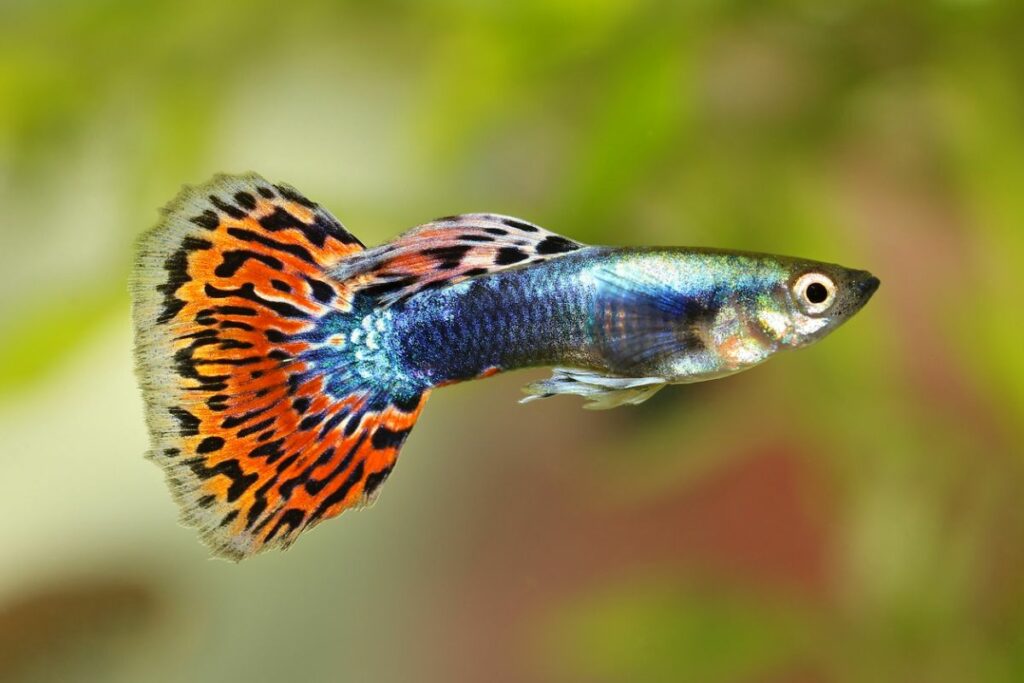
Ale, let's go with the tips!
How to Raise and Care for Baby Guppies
Well, nothing, it turns out that now I'm the daddy of a lot of mini Guppies; In fact, there are already a few batches of Guppy females that have given birth, the truth is that it is crazy how much these fish are produced, they do not stop still.
So it has occurred to me to give you some tips for those of you who have Guppies that have had babies and want to take care of them and others. The subject is a bit stressful because as I have already said, they do not stop reproducing and it is like a constant source of offspring and more offspring (with the problems that this entails), I do not recommend it much... but anyway, what is it about have guppies
Ale, let's go with the tips!
Table of Contents [ hide ]
Beware of the Filter
Without a doubt, the filter has been the biggest problem I have faced since at least in my case I have a cascade filter and what would be the "absorbing tube" (which surely has a technical name, but well, it is understood ) it's not like it has a "mesh" or something that stops small things from getting through. Something that also makes sense since the idea is that it "sucks" small things.
The thing is that of course, the pups are very small and yes, I have swallowed enough s. I thought they would be "smart" and not get too close, or that they would run away when they felt the suction; which in fact they do!; but of course, there are many days, many hours and there is always someone who catches him clueless or something and ends up sucked.
As in my case it is a cascade filter, because at least I could save them in a simple way (with an internal one it must be horrible). You just have to open the filter (top cover and such) and get them out of there. But hey, I'll tell you the exact process so you don't mess it up, because the filter is delicate:
- Turn off the filter.
- You remove the lid and prepare a container with a little bottled water (no tap water eh, then we load the beneficial bacteria ).
- You take out the sponges, cylinders, or in short, the filter material you use and add them to the container with water. We do this because it is better to keep them very wet so as not to damage the bacterial colony, which I remind you that most of the colony lives in the filter material of the filter.
- Now you have the filter purely with water. You should see the hatchlings out there, you pour the contents of the filter into the aquarium so that the hatchlings fall.
- You can take the opportunity to clean the filter material a bit , but be careful because here you can mess it up a lot. I leave you a link to the topic in this same paragraph so that you know how to do it well. If you don't want to clean it for now, you add the filter material back to the filter and turn it on. Make sure beforehand that you don't have any offspring in the water container with the filter material, as some can sneak in. You can move the material a little
- If you see that the filter does not pull well, you will simply have to add a little bottled water (the one you use for partial changes ) directly inside the filter. You can use a glass for it, you will see that when you do it the thing will start to flow. If one glass doesn't work, then two, until it flows.
- Check the water that you have left in the container so that there are no offspring and once done you can throw it away. To the aquarium, huh, to the WC, to the sink… wherever you want.
Also, you should set the filter very low if you want to prevent this from happening often. I ended up putting it on the minimum because I realized that then I didn't absorb them. It is true that this implied a more thorough cleaning on my part in the partial changes because the filter was too low, but it is what it is.
Another thing you can do, although I preferred not to do it, is to add a sock on the absorbing part of the filter, to prevent fish from entering. The fact is that I didn't like it for 2 reasons and it took me less than a day to remove it:
- The stocking as such has pores that are too small and therefore the filter did not swallow any type of rest of anything that was in the aquarium.
- I was worried that the stocking itself might secrete some sort of toxic element into the aquarium, so I thought I'd better remove it just in case. At the end of the day it's something synthetic, it has dyes and of course, because the thing made me feel bad.
That is why I recommend what I have already told you previously.
PD Silver of the Future: I discovered that if I put the filter with the minimum power, it creates a current that makes the cherubs come out by themselves.
PD2 Silver of the Future: This is my filter if you are interested.
They need a lot of shelters
Another of the great problems that I have been able to notice that for my part, at least, was previously corrected, is that since you do not have many elements in the aquarium that can serve as a refuge … then it is more likely that your fish will eat the young.
Even if you have hiding places, it is inevitable that some of them will be eaten, other hatchlings will die for no reason... it is something normal and in a way, although it sounds cruel, it is a good thing because if all the hatchlings came out you would end up having an aquarium so crowded that you would eventually end up having a lot of casualties (if you don't lose them all). I have had a lot of pup losses and even so right now my aquarium is quite busy, so imagine if they all come out ahead. I'm going to have to give them to someone because I have more and more Guppies and that is destabilizing my aquarium.
The case, you need to have plants , caves (or Cococuevas), trunks... or as if you have a skull, although I prefer natural things. The more you have, the better.
How to Feed the Hatchlings
This is not a problem as such, but it must be taken into account. The young also eat, but… what do they eat? Well, you'll see, the Guppy is an omnivorous fish (I'll talk more about its diet some day) and a more vegetable diet is usually recommended.
In short, throw your pellets or scales in the aquarium, only in greater quantity. I recommend more scales in this case, because as they are smaller, it will be easier for a hatchling to catch one. When the fish are eating above, it will be rare for them to approach because they tend to avoid other fish (because they eat them) but what is left over and remains on the floor of the aquarium or somewhere else, they will eat it.
These will also peck a little plants, algae and others, which is also food for them. In any case, do not think that a Guppy should feed only on algae and plants, you have to give it its scales or pellets anyway so that they are well nourished.
Beware of Partial Changes
And to finish something that can be very obvious, but well, I always like to clarify everything because sometimes the obvious can be overlooked when we have no experience.
For partial changes I usually recommend Siphon for large aquariums and Aerator Tube for small aquariums. No matter which one you use, both can very easily swallow hatchlings , so you'll need to be extremely careful not to do so.
And nothing, with that would be everything; I think you can get an idea of how much trouble it is to have babies, but it is true that it is something very nice to see and it is quite exciting to see how they grow and others. The problem is that the Guppies are machines for creating children and the subject is a bit uphill.
▷ Buy here Aloe Vera 99% pure . It will improve the health of your Betta, hand of saint, it is never lacking in my aquarium.
The problem is that of course, as in a while I will have even more adult Guppies , because these will reproduce more and there will be even more pups and ugh, I'll see how I put it together. Hey, until next time!


Comments
Post a Comment